
Bridging the Divide: Aligning Climate and Humanitarian Financing for Resilience in Africa
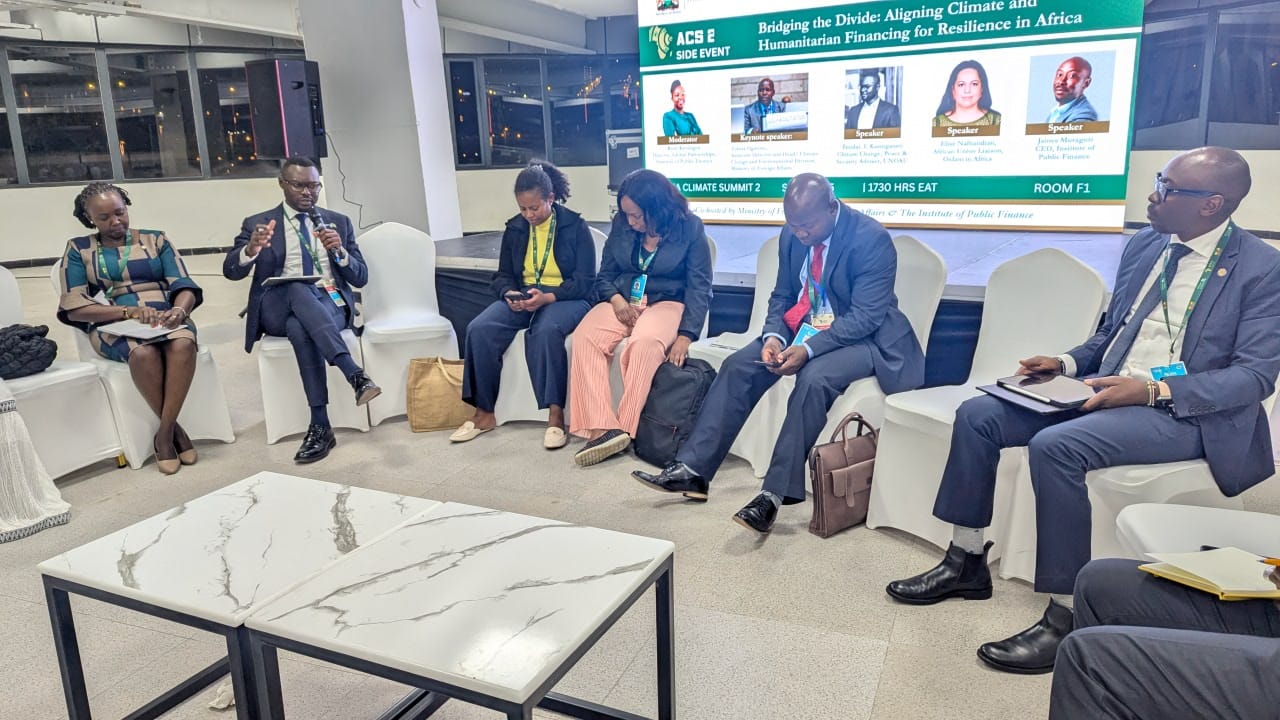
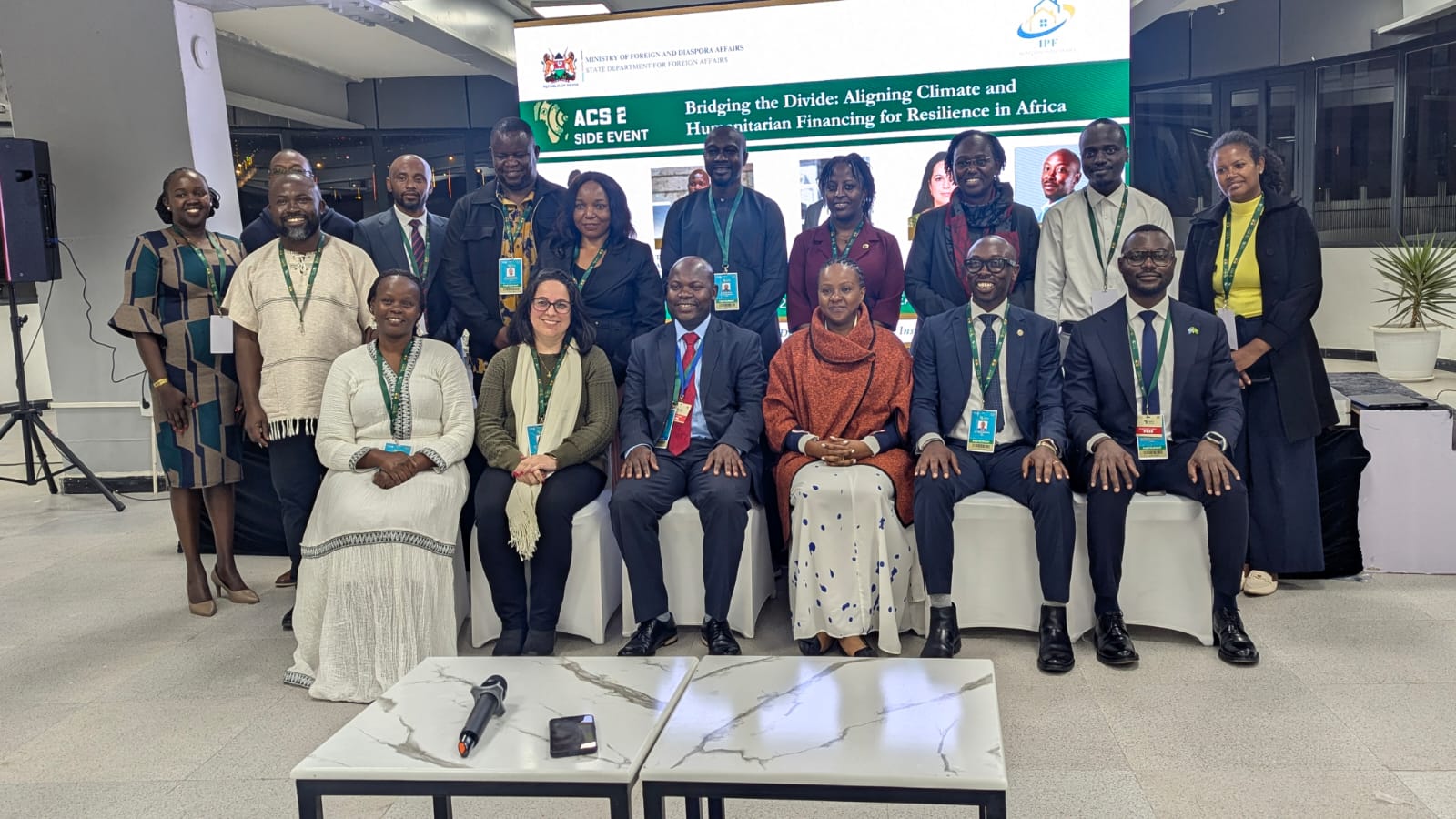
Various conversations continue to be had on the sidelines of the on-going 2nd edition of the Africa Climate Summit. The panel on Bridging the Divide: Aligning Climate and Humanitarian Financing for Resilience in Africa brought together experts including Mr. Tobias Ogweno of the Ministry of Foreign Affairs, Mr. James Muraguri of the Institute of Public Finance, Mr. Tendai Kasinganeti, Climate and Security Advisor at UNOAU, and Ms. Elise Nalnandian of OXFAM, where it was agreed that the world must rethink humanitarian financing in order to build long-term resilience in the face of escalating climate shocks.
The panelists reviewed the history of humanitarian financing in Africa, noting that traditional models—largely centered on food aid such as flour, salt, rice, and oil—continued to create a cycle of dependency and were not sustainable. Instead, communities are calling for dignified, predictable, and sustainable solutions that empower them to adapt. Climate-smart agricultural techniques, such as artificial intelligence, have been recognised as effective for weather forecasting in drought and flood scenarios. Innovations such as anticipatory drought and famine insurance were cited as examples of humanitarian funding approaches that help mitigate vulnerability. It was highlighted that local innovations across communities have resulted in a transition from food aid dependence to food surplus, with Machakos cited as an example of generating enough to feed Nairobi despite previously relying on food aid. Success stories of community-led water pan construction in arid and semi-arid countries for animal watering and irrigation were also highlighted.
Climate and Security Advisor, Tendai Kasinganeti called for a continental climate-security mechanism that integrated the work of UN agencies, linking climate change, peacebuilding, and conflict stabilization. The panel further emphasized that national adaptation policies and strategies ought to be adopted and incorporated within national budgets for effective implementation.
Speakers pointed to the high cost of inaction, with major droughts and floods across Africa fueling public anger and cycles of crisis. They also stated that, although global financing systems remain fragmented owing to donor priorities, the public finance systems and emergency funding mechanisms remained ill-prepared to attract private sector engagement, due to a lack of supportive policy ecosystem.
The session was informed of the need to prepare coherent and well articulated national and regional positions in readiness for COP30 and the UN General Assembly (UNGA) scheduled to take place later in the year. As the UN marks its 80th anniversary, participants asked hard questions as to whether the institution had delivered on its mandate and whether it was adequately prepared to respond to modern crises.
The session concluded with a strong call to action: Africa must move from fragmented humanitarian assistance to a cohesive humanitarian financing agenda that integrates climate resilience, disaster risk management, and long-term adaptation. Networking, strategic messaging, and cross-referencing humanitarian and climate priorities in all international engagements would remain critical to ensuring that Africa’s concerns are not only heard but acted upon.