
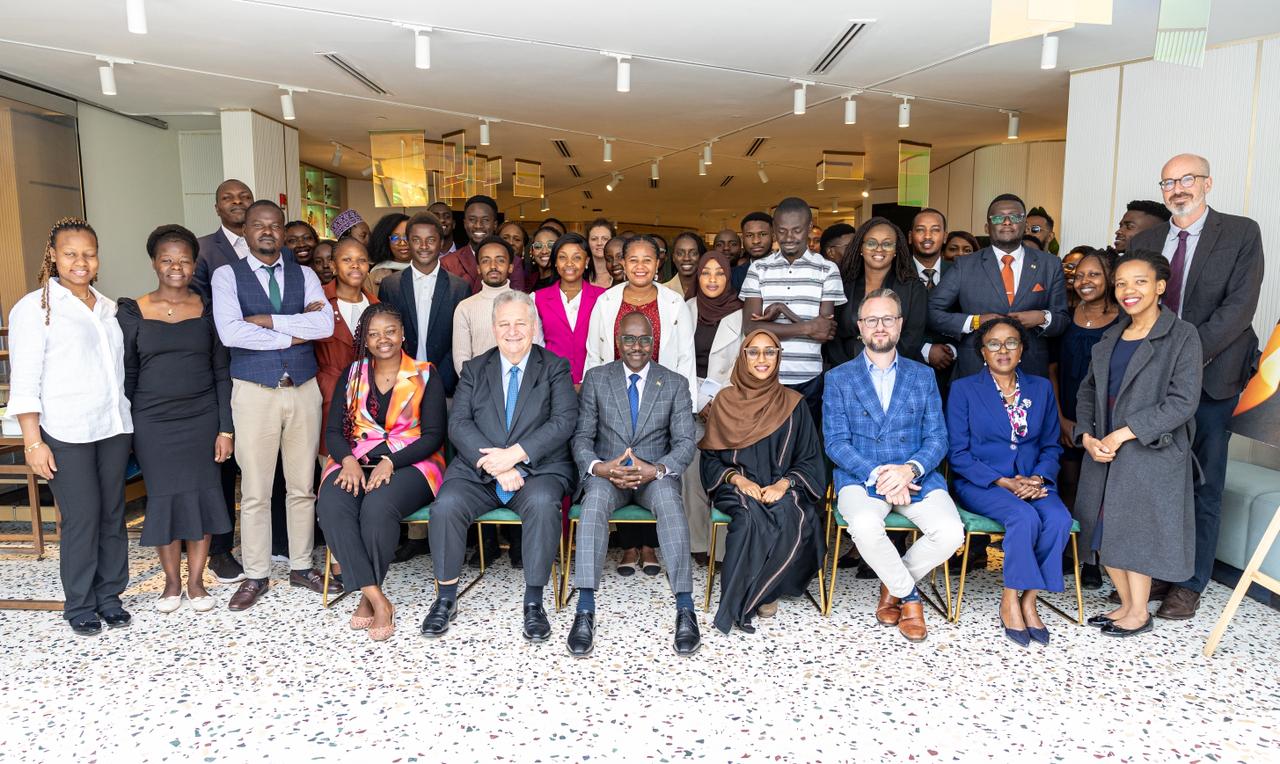
𝐏𝐒 𝐊𝐨𝐫𝐢𝐫 𝐒𝐢𝐧𝐠’𝐎𝐞𝐢 𝐂𝐡𝐚𝐦𝐩𝐢𝐨𝐧𝐬 𝐘𝐨𝐮𝐭𝐡 𝐀𝐠𝐞𝐧𝐜𝐲 𝐢𝐧 𝐊𝐞𝐧𝐲𝐚’𝐬 𝐅𝐨𝐫𝐞𝐢𝐠𝐧 𝐏𝐨𝐥𝐢𝐜𝐲
Kenya’s Principal Secretary for Foreign Affairs, Dr. Korir Sing’Oei, has called on the nation’s youth to play a central role in shaping the country’s foreign policy, describing them as “architects and prime movers” of Kenya’s diplomatic future. Speaking at a high-level youth diplomacy forum in Nairobi during Africa Youth Month, Dr. Sing’Oei emphasized intergenerational dialogue as essential to national and continental governance, aligning his remarks with Session Paper No. 1 – Foreign Policy of 2025, which advocates for inclusive, citizen-driven diplomacy.
Addressing ambassadors, development partners, civil society leaders, and young participants, he said the forum reflects “the evolution of Kenya’s foreign policy and the growing confidence in our youth-led democratic governance processes.”
Convened with representatives from the Belgian Embassy, Conrad Adenauer Stiftung, and youth networks, the forum provided a platform to examine diplomacy amid digital disruption, geopolitical uncertainty, and rising civic engagement.
Dr. Sing’Oei highlighted the dual impact of digital platforms: while they create unprecedented opportunities for youth engagement, they also amplify misinformation and weaken public trust. Since assuming office three years ago, he has observed Kenyan youth, academia, media, and civil society increasingly shaping foreign policy, signaling a shift from elite-driven diplomacy to a participatory, national approach.
Reflecting on last year’s intergenerational dialogue at KICC, the PS praised young diplomats for delivering “thoughtful, research-driven pitches on climate violence, cybersecurity, misinformation, and global governance.” These engagements have informed key priorities, including strengthening digital diplomacy, expanding mentorship programs, embedding youth perspectives in policy, and scaling initiatives such as Diplomacy Mashinani, which brings foreign policy discussions to universities, counties, and civic spaces beyond Nairobi, fostering national ownership and practical engagement with Kenya’s international agenda.
Dr. Sing’Oei placed these initiatives in a broader continental and global context. With Africa’s youth projected to constitute 22% of the global population by 2030, he underscored the continent’s transformative potential. Referencing outcomes from the recent African Union Summit in Angola, he highlighted discussions on migration, industrialization, and strategic partnerships with Europe, stressing that addressing these challenges requires bold, innovative leadership from Africa’s young generation leaders who can harness technology, capital, and human talent to drive sustainable development.
Restoring public trust was another focus of the forum. Sessions on digital governance, responsible technology, and civic engagement emphasized the importance of youth-led initiatives in strengthening institutional credibility. “Trust is the glue that holds institutions and societies together,” Dr. Sing’Oei said, urging young Kenyans to actively shape the agenda and translate foreign policy into tangible community impact, a principle embedded in Session Paper No. 1 – Foreign Policy of 2025.
Concluding with a literary reference to Julius Caesar, Dr. Sing’Oei reminded participants that “the fault is not in our stars, but in ourselves.” He framed this as a call to agency, emphasizing that the choices young Kenyans make today to engage, innovate, and participate will define the nation’s diplomatic future.
The forum underscored a clear shift: Kenya’s foreign policy is increasingly collaborative, youth-driven, digitally fluent, and community-focused, signaling a new era in which young Kenyans co-create the country’s voice on the global stage while responding to continental and international challenges highlighted at the Angola AU Summit.