
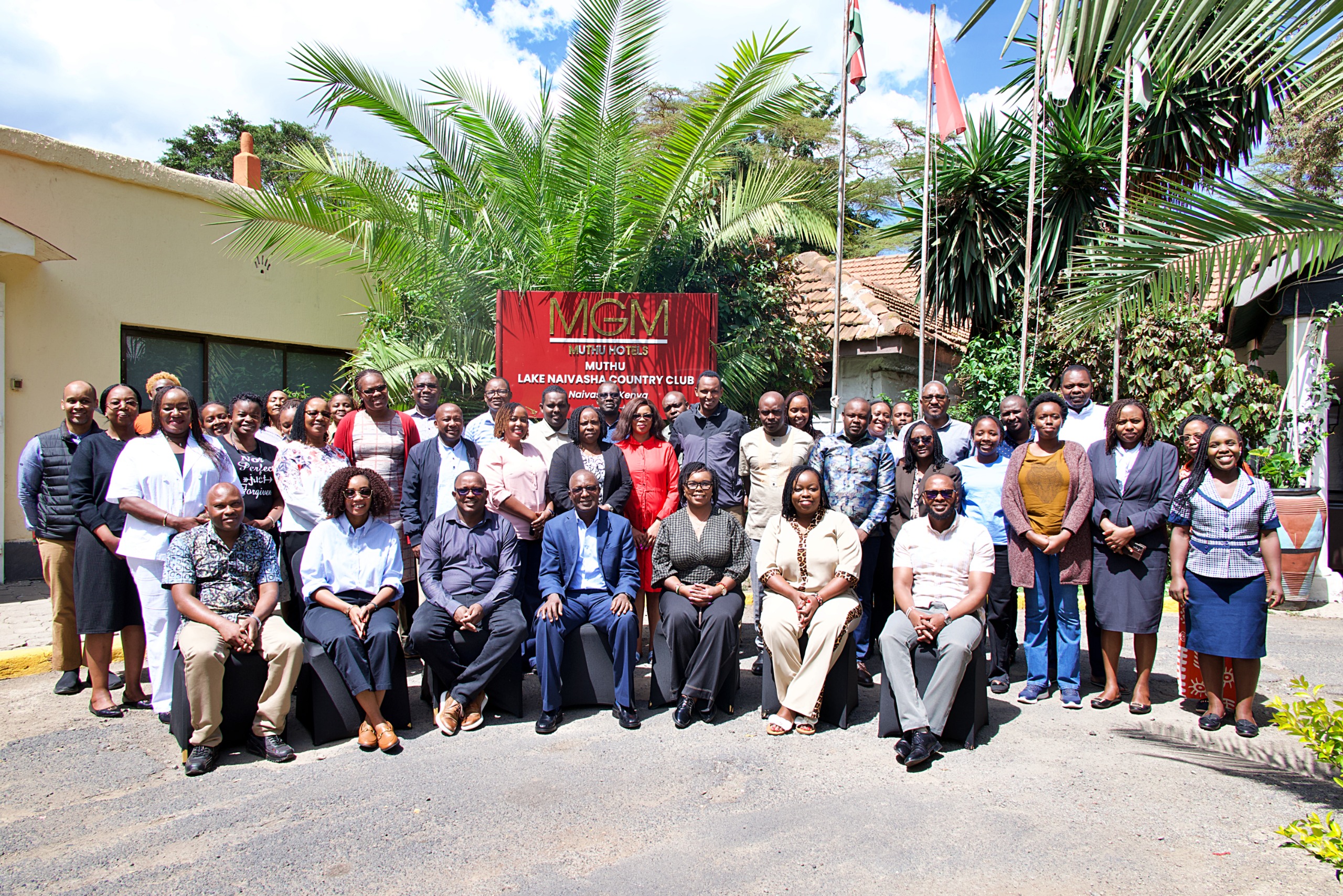
State Department equips Risk Champions to Strengthen Risk Management and Institutional Resilience
The State Department for Foreign Affairs has commenced a five-day training programme for designated Risk Champions across various departments and cadres, aimed at strengthening risk management systems at the Ministry Headquarters and Kenya’s Missions abroad.
The training brings together officers from diverse functions, including Foreign Service, Economics, CPPMD, Human Resource, Communication, Legal Affairs, Finance, Procurement, ICT, Records Management and Administration.
The training is designed to equip Risk Champions with the knowledge and skills required to support the implementation of the Ministry’s Risk Management Framework.
Presiding over the official opening of the training in Naivasha, Secretary, Foreign Service Administration and Management, Amb. Michael Kiboino, commended the project team for the progress made towards the development of the Risk Management Policy Framework.
Amb. Kiboino noted that the initiative had followed a number of key milestones, including the establishment of the Risk Management Committee, appointment of the Technical Assistance Programme (TAP), and the conduct of an initial staff sensitization exercise.
He emphasized that the initiative was not merely a compliance requirement, but a critical institutional measure aimed at strengthening the Ministry’s capacity to identify, assess and mitigate risks while ensuring effective, resilient and sustainable service delivery.
Amb. Kiboino highlighted five key areas underscoring the importance of effective risk management. First, he noted that risk management is a legal requirement under the Public Finance Management Regulations, 2015, which require national government entities to establish risk management strategies, internal controls and mechanisms for risk prevention.
Second, effective risk management promotes service continuity and sustainability by enabling institutions to anticipate and prepare for potential financial, operational, technological and reputational disruptions. Third, it safeguards public assets and resources against waste, fraud, abuse and misappropriation.
Fourth, risk management strengthens accountability and transparency through robust internal controls and reporting mechanisms, thereby promoting responsible governance and public confidence.
Finally, it supports informed strategic decision-making by enabling institutions to proactively address threats while identifying opportunities aligned with strategic objectives.
Amb. Kiboino noted that the development of the Policy Framework was a highly anticipated undertaking that would contribute to institutional performance while strengthening compliance with public finance management requirements. He emphasized that the Framework should provide practical systems for identifying emerging risks, assessing their potential impact and implementing appropriate mitigation measures.
He further acknowledged the technical support and expertise provided by the National Treasury, noting that relevant guidelines and standardized templates for risk management in public sector entities would help promote consistency, effectiveness and compliance across government institutions.
“Risk Champions will play a critical role in identifying and monitoring risks, maintaining and updating the institutional risk register, identifying emerging risks, and ensuring that significant risks are escalated to the relevant committees and management for appropriate action,” said Amb. Kiboino.
Participants were encouraged to actively engage in the training, seek clarification and strengthen their technical capacity to effectively discharge their responsibilities. The knowledge and skills acquired are also expected to be shared with other staff to enhance risk management awareness and capacity across the Ministry.
Amb. Kiboino emphasized that effective risk management is fundamental to building a resilient, accountable and credible institution capable of delivering its mandate and responding effectively to emerging challenges.
The training is expected to culminate in the development and finalization of the Ministry’s Risk Management Policy Framework, which will provide an institutional basis for strengthening risk identification, assessment, mitigation, monitoring and reporting across the State Department for Foreign Affairs and Kenya’s Missions abroad.