
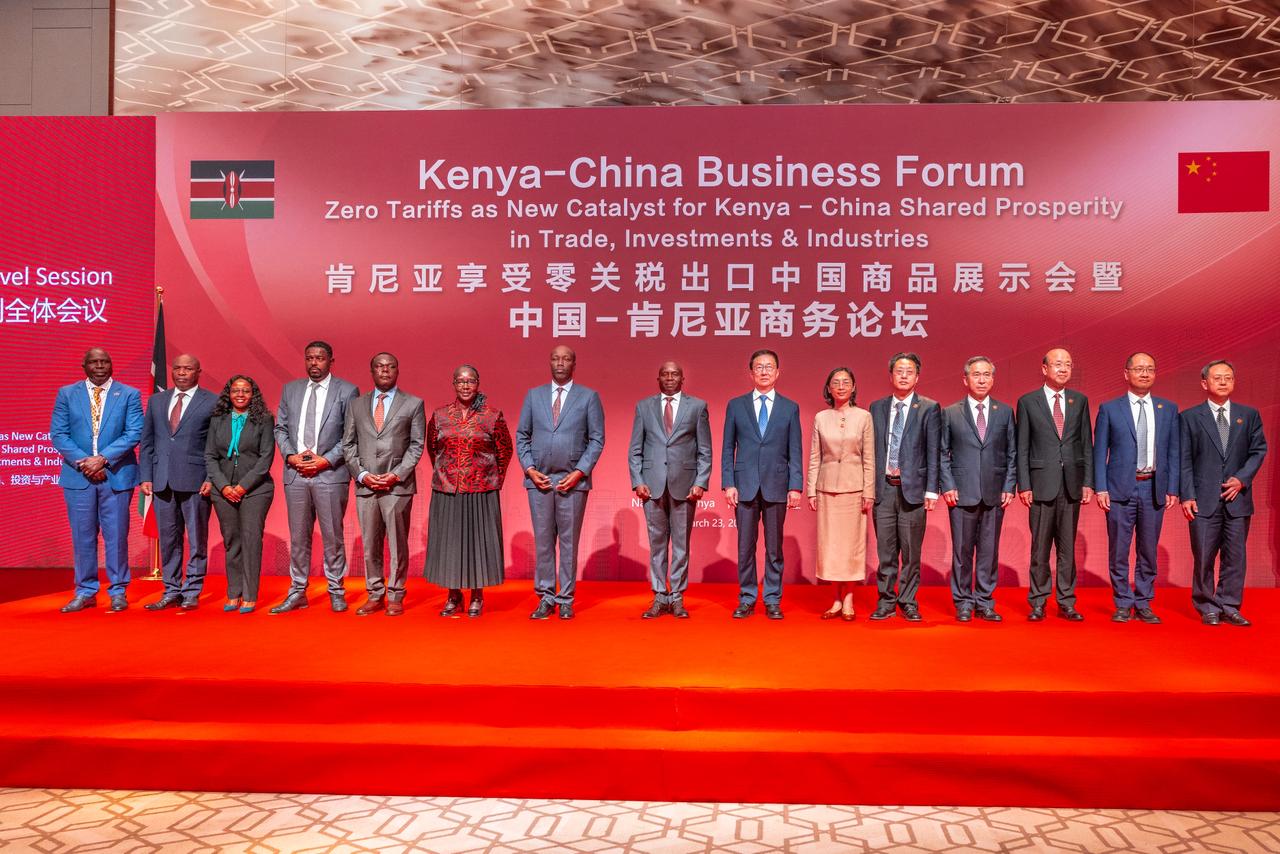
Kenya and China Intensify Push to Close Trade Gap Through Zero-Tariff Agreement
Kenya and China Intensify Push to Close Trade Gap Through Zero-Tariff Agreement
Kenya and China have signaled a renewed commitment to rebalancing their trade relationship, with senior leadership from both countries endorsing a zero-tariff framework and expanded investment cooperation during a high-level bilateral engagement.
Kenya’s Deputy President and China’s Vice President lent political weight to efforts aimed at addressing a trade deficit estimated at over KSh500 billion (USD 4 billion), underscoring the urgency of translating policy agreements into measurable economic outcomes.
The centerpiece of the discussions is the Kenya–China Early Harvest Agreement, which grants Kenyan exports duty-free access to approximately 98.2 percent of Chinese tariff lines. The arrangement is expected to boost shipments of agricultural and value-added products including tea, coffee, avocados, macadamia nuts and horticultural goods into one of the world’s largest consumer markets.
While bilateral trade has grown steadily, it remains structurally imbalanced. Kenya continues to import high-value manufactured goods such as machinery, electronics and vehicles from China, while exporting predominantly low-value primary commodities. In 2024 alone, Kenya imported goods worth about USD 4.3 billion from China, compared to exports of roughly USD 197 million.
Addressing a Kenya–China Business Forum attended by policymakers and industry leaders, H.E Professor Kithure Kindiki called for stronger private sector collaboration to fully exploit the zero-tariff opportunity. He emphasized the importance of business-to-business linkages, regulatory efficiency, and export readiness to ensure Kenyan producers can compete effectively in the Chinese market.
China’s Vice President reaffirmed support for deepening economic ties, highlighting China’s willingness to facilitate market access, strengthen trade logistics, and encourage Chinese enterprises to invest in Kenya’s priority sectors.
Nairobi is positioning itself as a regional manufacturing and logistics hub, inviting Chinese firms to invest in agro-processing, cold chain infrastructure and industrial production within its Export Processing Zones (EPZs) and Special Economic Zones (SEZs). The government has pledged a stable policy environment and investor-friendly reforms to attract long-term capital.
The renewed momentum comes ahead of the Kenya International Investment Conference, where additional agreements and policy measures are expected to be announced to accelerate investment flows.
While challenges remain in narrowing the trade gap, the coordinated push by Nairobi and Beijing reflects cautious optimism that sustained cooperation anchored in zero-tariff access and industrial partnerships can gradually rebalance one of Africa’s most significant bilateral economic relationships.