
Kenya and South Africa Strengthen Bilateral Relations Through Six New Cooperation Agreements
Kenya and South Africa Strengthen Bilateral Relations Through Six New Cooperation Agreements
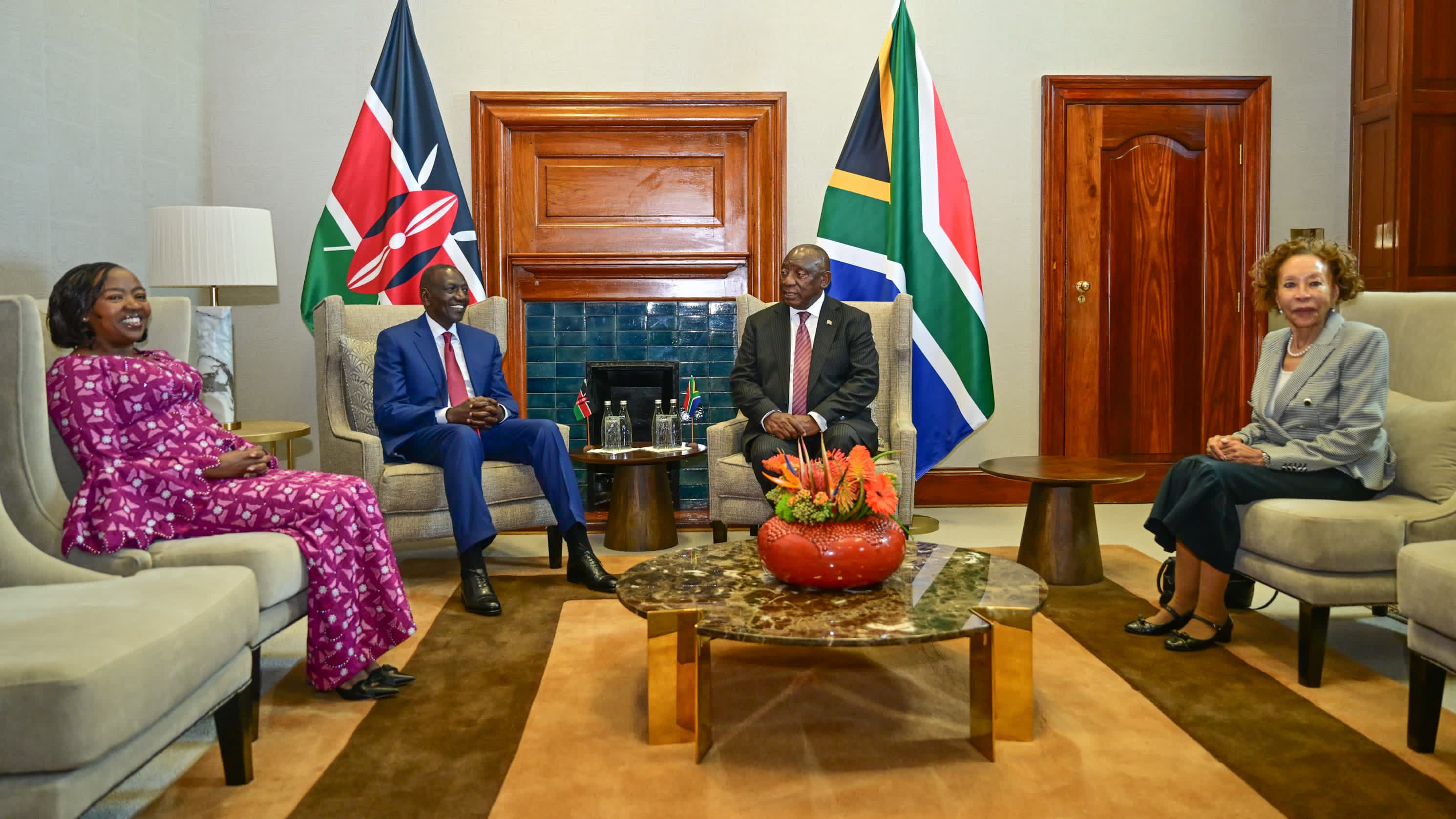
President William Ruto and South African President Cyril Ramaphosa have witnessed the signing of six Memoranda of Understanding (MoUs) aimed at strengthening bilateral cooperation and advancing the strategic partnership between Kenya and South Africa.
The agreements were signed during President Ruto's State Visit to South Africa and cover cooperation in trade facilitation, shipping and maritime transport, Technical and Vocational Education and Training (TVET), gender equality and women empowerment, arts, culture and heritage, as well as sport and recreation.
The six new instruments bring the total number of bilateral agreements and memoranda concluded between the two countries to 34, reflecting the growing depth and breadth of Kenya-South Africa relations.
Speaking during a joint media briefing at the Union Buildings in Tshwane, President Ruto said the agreements demonstrate the expanding partnership between the two countries and their shared commitment to promoting economic growth, regional integration and sustainable development.
"As a statement of our growing ties, we have today witnessed the signing of six instruments," President Ruto said.
The two leaders reaffirmed their commitment to strengthening trade and investment relations and leveraging opportunities under the African Continental Free Trade Area (AfCFTA) to enhance intra-African trade, industrialisation and job creation.
Among the agreements signed was a Memorandum of Understanding on the facilitation of trade through cooperation in standardisation, technical regulations, conformity assessment, accreditation and metrology. The agreement is expected to address technical barriers to trade, improve market access and facilitate the movement of goods between the two countries.
President Ruto noted that while significant progress has been made in strengthening economic ties, tariff and non-tariff barriers, limited market access and regulatory constraints continue to impede the full potential of intra-African commerce. He said the relevant ministries have been tasked with accelerating efforts to address these challenges.
To enhance connectivity between East and Southern Africa, the two countries also signed an agreement on shipping and maritime cooperation. The framework will strengthen logistics networks, facilitate trade flows and support implementation of the AfCFTA.
Recognising the importance of inclusive development, Kenya and South Africa further concluded an agreement on gender equality and women empowerment to promote collaboration on policies and programmes that enhance women's participation in leadership, governance, entrepreneurship and economic development.
In support of human capital development, the two countries signed a Memorandum of Understanding on Technical and Vocational Education and Training aimed at strengthening cooperation in skills development, curriculum design, vocational training and workforce preparedness.
The leaders also witnessed the signing of agreements on arts, culture and heritage, and sport and recreation, which will promote cultural exchanges, preserve shared heritage and strengthen people-to-people ties while enhancing collaboration between sporting institutions and supporting athlete development.
President Ramaphosa reaffirmed South Africa's commitment to deepening cooperation with Kenya, describing Kenya as a key strategic partner and gateway to East Africa. He noted that the agreements signed during the State Visit provide a strong foundation for enhanced collaboration in trade, investment, skills development, infrastructure development and regional integration.
On regional and continental issues, the two Presidents exchanged views on peace and security developments across Africa and reiterated their commitment to African-led solutions to African challenges. They pledged continued collaboration through the African Union and other multilateral platforms in advancing peace, stability and sustainable development on the continent.
The leaders also reaffirmed their support for ongoing African Union institutional reforms and called for a more inclusive, representative and responsive global governance architecture that reflects contemporary realities and the aspirations of developing nations.
The two leaders expressed confidence that the agreements and shared commitments reached during the State Visit will deliver tangible benefits to the peoples of Kenya and South Africa while advancing the African Union's Agenda 2063 and the continent's broader objectives of economic integration, prosperity, peace and sustainable development.