
Kenya Pushes for Binding Climate Action at ICJ Conference
Kenya Pushes for Binding Climate Action at ICJ Conference
Kenya has called for urgent, legally binding global action on climate change as government officials, legal experts, and international partners convene in Nairobi to examine a landmark advisory opinion by the International Court of Justice.
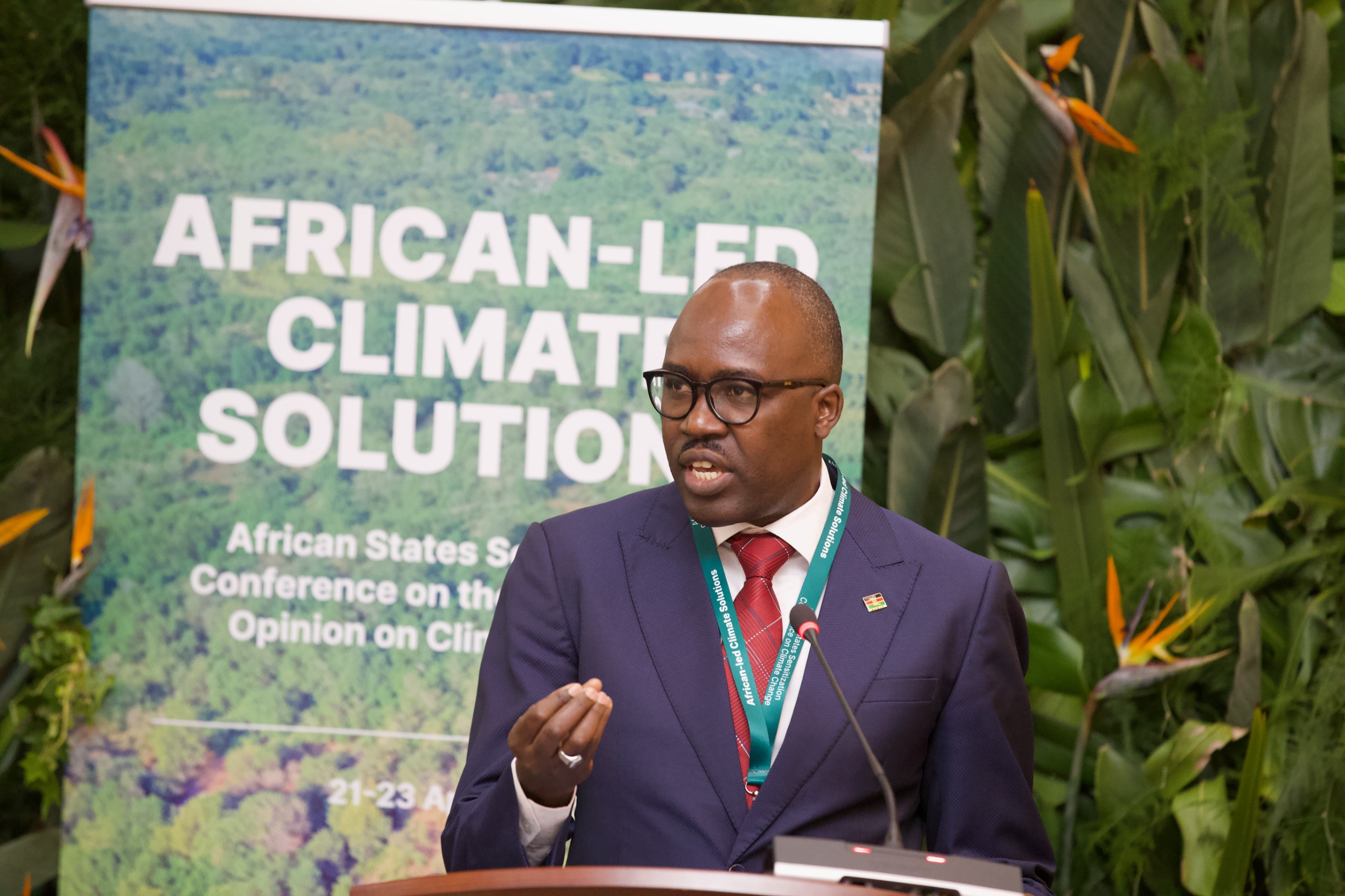
Speaking at the opening of the African-led Climate Solutions sensitization conference on the ICJ Advisory Opinion on Climate Change, held at the ICRAF campus in Gigiri, Principal Secretary for Foreign Affairs Dr. Korir Sing’Oei said the July 2025 advisory opinion marked a turning point in global climate governance. He noted that the ruling affirmed climate obligations as legally enforceable duties rather than voluntary commitments.
The conference, organized in partnership with the World Agroforestry Centre, the Kenya Foreign Service Academy, Queen Mary University of London, University of Nairobi, and Kabarak University, brought together judges, policymakers, scholars, and civil society actors to assess the ruling’s legal and policy implications.
Dr. Sing’Oei warned that climate change remains an existential threat, with impacts already intensifying across East Africa. Recurring droughts and floods in Kenya, Somalia, and Tanzania have disrupted livelihoods, reduced agricultural output, and worsened food insecurity. Recent flooding in parts of Nairobi has caused deaths, displacement, and significant infrastructure damage, underscoring the rising human and economic cost of climate shocks.
The ICJ opinion stems from a 2023 resolution of the United Nations General Assembly, sponsored by Kenya, Vanuatu, and other states. It clarifies that countries are obligated to prevent environmental harm, cooperate internationally, and uphold human rights in addressing climate risks. It also establishes that failure to meet these obligations may trigger legal consequences, including reparations.
The ruling reinforces commitments under the Paris Agreement, emphasizing that Nationally Determined Contributions must be prepared with due diligence to help limit global warming to 1.5°C.
Kenya outlined several measures it has taken to meet these obligations, including the Climate Change Act (2016), updated Nationally Determined Contributions targeting a 32 percent reduction in emissions by 2035, and a plan to achieve 100 percent renewable energy by 2030. Additional initiatives include planting 15 billion trees by 2032 and advancing continental programmes such as the African Green Industrialization Initiative and the Accelerated Partnership for Renewables in Africa, outcomes of the Africa Climate Summit 2023.
The government has also introduced carbon market regulations aligned with Article 6 of the Paris Agreement and continues to advocate for equity in global mitigation efforts, including differentiating between “luxury” and “survival” emissions.
Despite these efforts, Dr. Sing’Oei noted that developing countries face a significant financing gap, requiring up to $2.5 trillion annually by 2030 for climate action. Kenya alone needs an estimated $62 billion to meet its climate targets. He urged high-emitting nations to fulfil their obligations and support compensation for climate-related loss and damage.
Éliane Ubalijoro, Director General of ICRAF and CEO of CIFOR-ICRAF, highlighted the importance of aligning science, law, and policy through stronger science diplomacy. She emphasized that land-based solutions—such as forests, agroforestry, and restoration—should be central to climate strategies, particularly in Africa where livelihoods are closely tied to natural systems. She also pointed to growing continental momentum through initiatives like the African Forest Landscape Restoration Initiative and urged stakeholders to move from principle to action.
Meanwhile, Henry K. Kiplagat called on African universities to play a leading role in climate action by generating interdisciplinary research to inform policy and innovation. He emphasized the role of academia and youth in shaping global climate discourse and encouraged institutions to adopt sustainable practices.
Participants at the conference are expected to examine how the ICJ opinion will influence domestic law, international negotiations, climate financing, and capacity building. The outcomes are likely to inform ongoing discussions at the United Nations and strengthen Africa’s collective voice in global climate forums.
The meeting also reflects Kenya’s broader ambition to position Nairobi as a hub for environmental diplomacy and policy leadership, as global pressure grows on states to translate climate commitments into measurable action.