
Mudavadi Pushes Legal Reforms and Unity to Bolster Kenya’s Diplomatic Strength
Mudavadi Pushes Legal Reforms and Unity to Bolster Kenya’s Diplomatic Strength
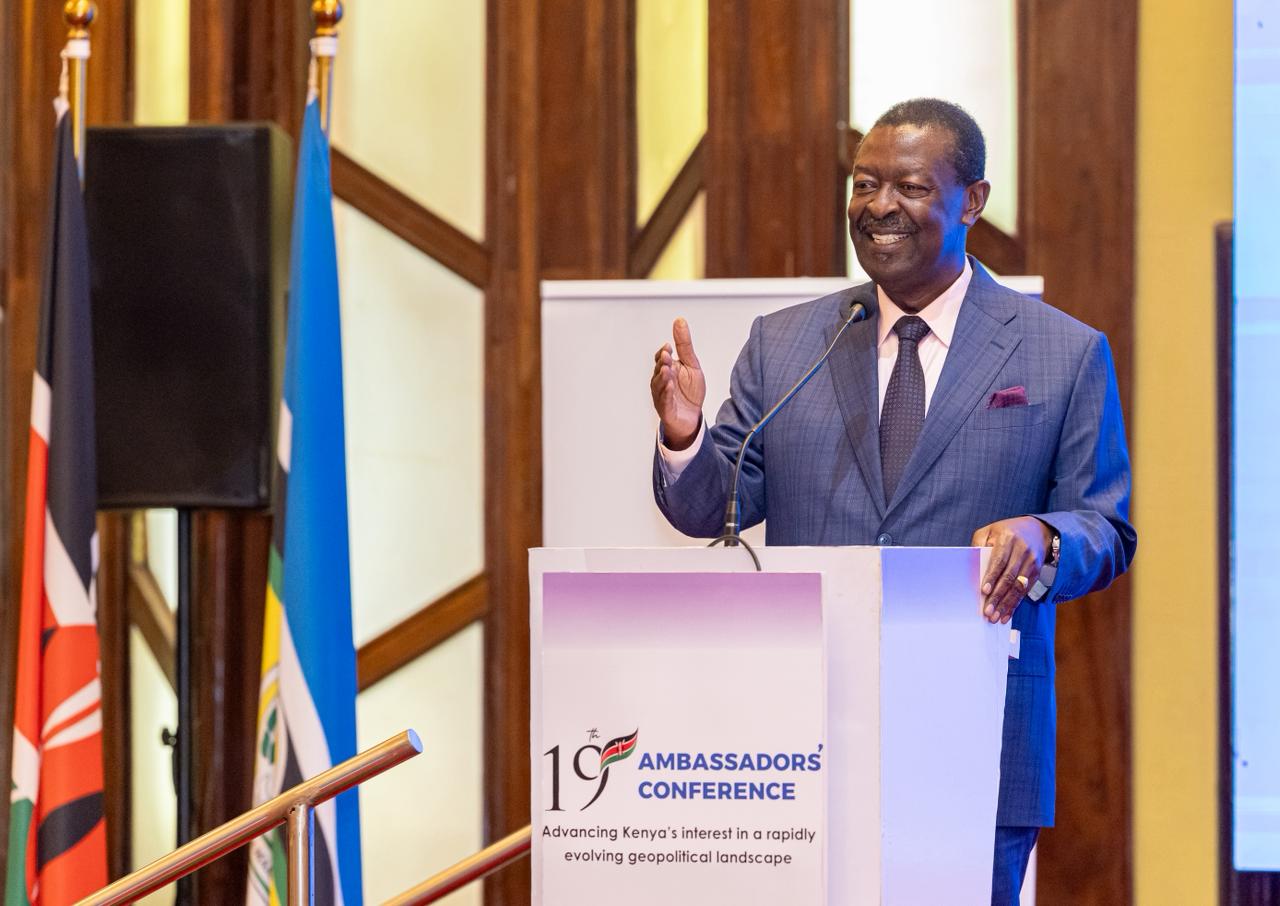
Prime Cabinet Secretary and Foreign Affairs Minister Musalia Mudavadi has called for sweeping legal reforms, stronger institutional unity, and clearer strategic direction to enhance Kenya’s diplomatic effectiveness.
Addressing delegates at the close of the 19th Ambassadors’ Conference, Mudavadi revealed plans to introduce legislation aimed at formalising performance management across the public service. The proposed reforms would align both the Executive and Parliament under a unified legal framework, ensuring consistency and accountability.
“Kenya pioneered innovation in public service decades ago. Other countries have adopted and legislated these models. It is time we anchor them in law,” he said.
Mudavadi underscored the importance of cohesion within diplomatic missions, cautioning that internal divisions can weaken Kenya’s bargaining power on the global stage. He stressed that diplomacy thrives on teamwork, discipline, and respect for protocol, while also encouraging senior officials to mentor younger officers.
He further urged embassies to tap into the expertise of skilled Kenyans in the diaspora, noting that integrating such professionals would strengthen institutional capacity and preserve valuable knowledge.
Pointing to Kenya’s rising global standing, Mudavadi highlighted a request by the Commonwealth Secretariat for a Kenyan official to head protocol across its 56 member states, an indication of growing international confidence in the country’s diplomatic leadership.
He maintained that Kenya’s foreign policy must remain firmly anchored in national interests, citing ongoing engagement with major partners such as the United States, China, the UAE, India, the UK, and the European Union to boost trade and investment.
“Belonging to economic blocs does not mean passivity. We must negotiate from a position of strength,” he said.
On governance and financial integrity, Mudavadi pointed to progress in key legislative measures aimed at helping Kenya exit the Financial Action Task Force grey list. Proposed laws addressing conflict of interest, anti-money laundering, public benefit organisations, and collateral assets are currently advancing in Parliament. He also noted that Kenya has undergone a diagnostic review by the International Monetary Fund, signalling commitment to transparency and global standards.
Despite these gains, Mudavadi acknowledged gaps in preparedness among some diplomats and urged them to sharpen their policy understanding and communication skills. He emphasised that high-level international engagements demand clarity, confidence, and authority.
To strengthen the diplomatic service, he proposed fast-tracking legal reforms to define roles and enforce accountability, fostering unity within missions through structured mentorship and clear hierarchies, and leveraging diaspora expertise in key postings.
He also called for continuous professional development, including scenario-based training and communication workshops, alongside regular performance reviews to ensure missions remain aligned with Kenya’s national priorities.
Mudavadi concluded that legal reform, professional discipline, and strategic clarity are critical for Kenya to expand its global influence, signalling a shift toward a more structured, capable, and forward-looking diplomatic service.