
President Ruto Urges Africa to Finance Its Own Infrastructure as Nairobi Hosts Landmark Summit
President Ruto Urges Africa to Finance Its Own Infrastructure as Nairobi Hosts Landmark Summit
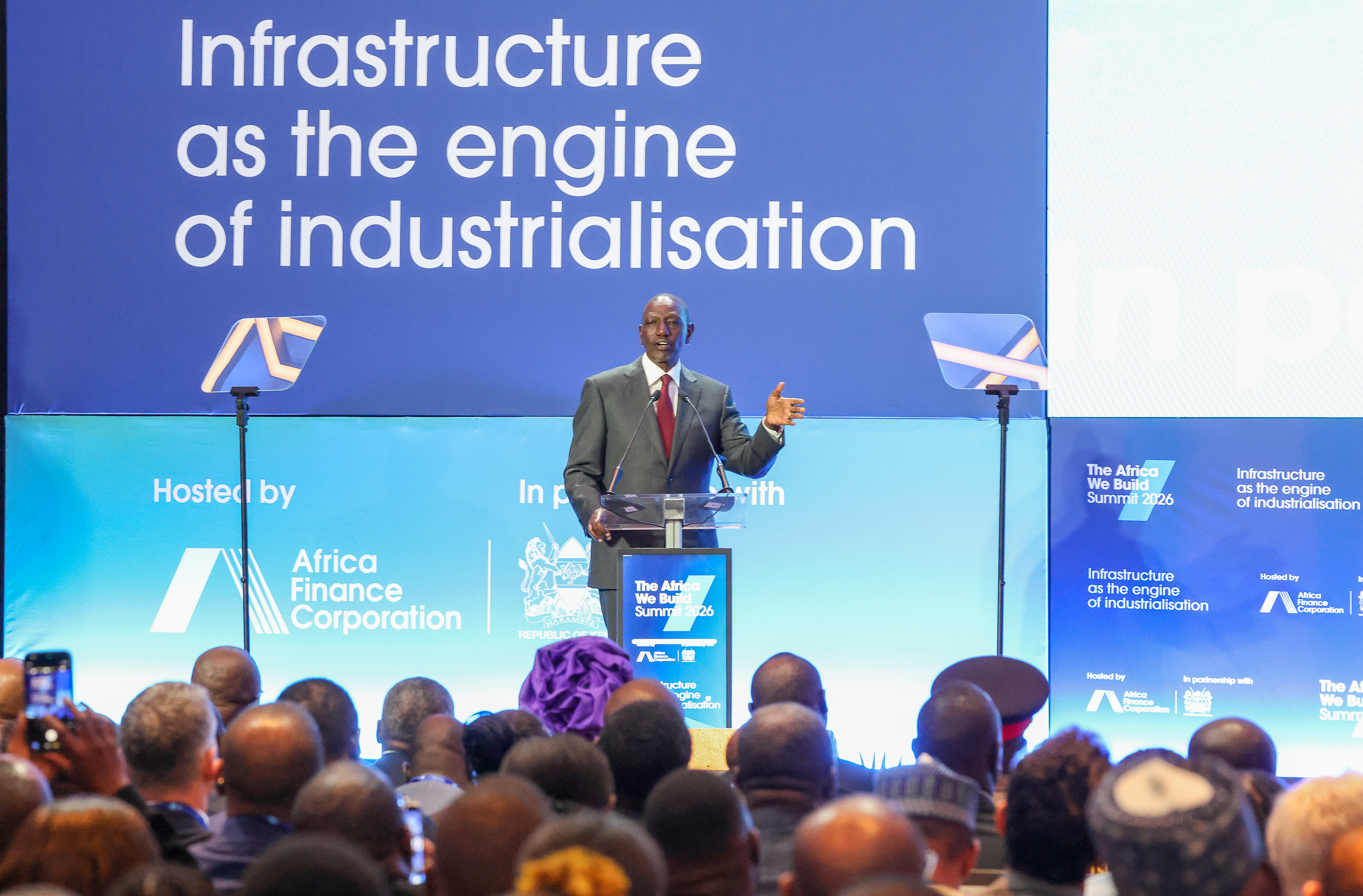
The inaugural Africa We Build Summit 2026 opened today in Nairobi under the theme “Infrastructure as the Engine of Industrialisation.”
Hosted by the Africa Finance Corporation in partnership with the African Union Commission and the Government of Kenya, the Summit convened Heads of State, ministers, financiers, and industry leaders for two days of high-level dialogue and deal-making.
The opening ceremony was graced by William Samoei Ruto, Yoweri Kaguta Museveni, leading industrialist Aliko Dangote, and Samaila Zubairu.
In his keynote address, President Ruto called on African countries to harness domestic financial resources to accelerate the delivery of critical infrastructure projects, warning that overreliance on external capital continues to constrain the continent’s development ambitions.
“As the saying goes, he who pays the piper calls the tune,” President Ruto stated, noting that foreign financing often prioritizes external interests over Africa’s long-term development needs.
The President emphasized the importance of strengthening regional and national development financing mechanisms, citing Kenya’s National Infrastructure Fund and the proposed Sovereign Wealth Fund as key instruments to mobilize capital for priority projects valued at approximately KSh5 trillion over the next decade.
The Summit, he noted, comes at a time of global economic uncertainty, underscoring the urgency for Africa to adopt self-reliant and resilient development models. He further highlighted the continent’s paradox of being a major producer of crude oil while remaining heavily dependent on imported refined petroleum products.
To address this, President Ruto revealed that East African countries are exploring the development of a joint oil refinery at Tanga Port in Tanzania to enhance regional energy security and reduce import dependence.
President Museveni, in his remarks, underscored the availability of domestic financial resources within Africa, particularly pension funds, which could be leveraged to finance large-scale infrastructure projects if strategically managed.
Discussions at the Summit also focused on deepening regional integration, with leaders calling for enhanced connectivity through roads, railways, ports, and energy systems to unlock intra-African trade and industrial growth.
Prime Cabinet Secretary and Cabinet Secretary for Foreign and Diaspora Affairs Musalia Mudavadi emphasized the Summit’s focus on delivering tangible outcomes.
“This is a profound opportunity to turn potential into action by forging partnerships, unlocking finance, and building continental synergy. The objective is clear—to move from dialogue to actual deals and scale infrastructure investment across Africa,” he said.
By the close of the Summit, the Africa Finance Corporation and its partners aim to deliver concrete commitments, including the signing of regional corridor compacts, the launch of the Africa Infrastructure Investment Pipeline (2026–2030), the establishment of capital mobilisation platforms, and the release of the State of Africa’s Infrastructure Report 2026.
The Summit also provides a platform for Heads of State to announce national milestones, showcase priority projects, and engage directly with global investors.
Overall, the Summit reflects Africa’s determination to reduce vulnerability to global shocks, harmonise policy frameworks, and strengthen development finance institutions. It positions infrastructure not as isolated projects, but as integrated corridors and ecosystems linking energy, logistics, industry, and trade across the continent.