
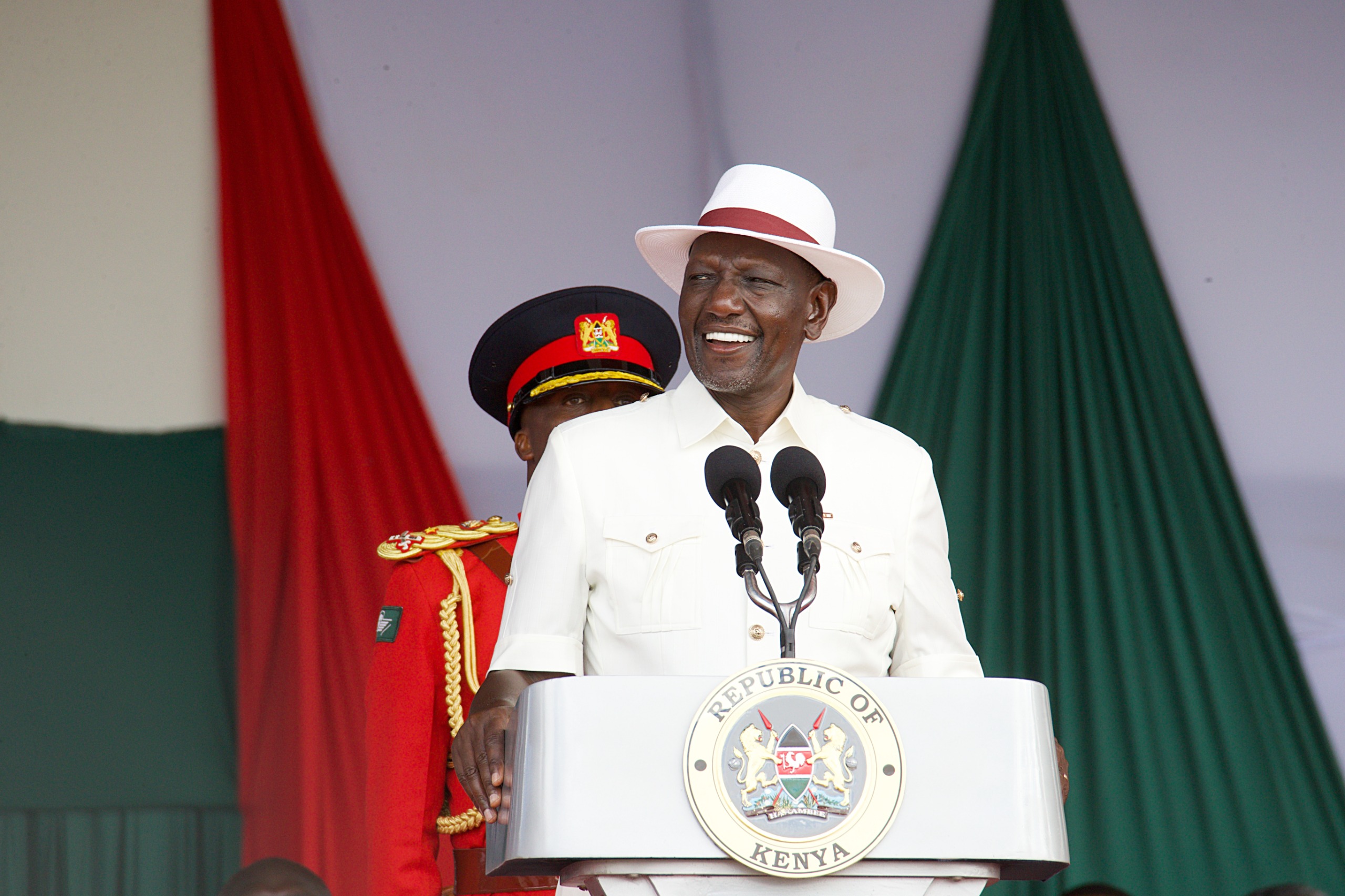
President Ruto's Wajir Address Signals Kenya's Vision for Inclusive Development and Regional Leadership
H. E. President William Ruto used Kenya's 63rd Madaraka Day celebrations in Wajir County to deliver a message of national inclusion, economic transformation, and regional integration, positioning Northern Kenya as a critical driver of the country's future growth and influence in the Horn of Africa.
Hosting the national celebrations in Wajir for the first time since independence marked a significant moment for the region and underscored the government's commitment to addressing historical inequalities. The choice of venue carried deep symbolism for a region that has long grappled with underdevelopment, limited infrastructure, and perceptions of exclusion from the national mainstream.
In his address, President Ruto acknowledged the historical neglect experienced by communities in Northern Kenya and committed his administration to accelerating development initiatives aimed at bridging longstanding disparities.
"For many years, some parts of our country were left behind. We must confront that history and ensure every Kenyan enjoys equal opportunities regardless of where they live," the President said.
He outlined plans to expand investment in roads, water projects, healthcare facilities, education, digital connectivity, and other critical infrastructure to enhance livelihoods and unlock economic opportunities across the region.
The President's remarks extended beyond domestic development priorities, highlighting Northern Kenya's growing strategic importance within Kenya's regional economic and diplomatic agenda. Situated at the crossroads of Kenya, Ethiopia, and Somalia, the region is increasingly viewed as a gateway for trade, investment, and cross-border cooperation.
Central to this vision is the Northern Kenya Gateway Corridor, a major infrastructure initiative linking Isiolo, Wajir, and Mandera. The project is expected to improve transport connectivity, reduce logistical costs, facilitate commerce, and strengthen economic ties within the Horn of Africa.
Improved infrastructure in Northern Kenya is expected to unlock significant trade opportunities by connecting communities to national and regional markets. Enhanced mobility is also expected to attract private investment and stimulate enterprise growth in the region.
Ruto further emphasized investments in telecommunications, renewable energy, and digital infrastructure as part of efforts to transform Northern Kenya into a modern economic hub capable of supporting innovation, entrepreneurship, and regional commerce.
Economic empowerment featured prominently in the President's address, particularly through renewed focus on the livestock sector, which remains the backbone of the region's economy. The government plans to modernize livestock production through improved animal health services, expanded market access, and increased value addition in meat, dairy, and leather processing.
"Our livestock sector can become one of Kenya's strongest export industries while improving incomes for millions of pastoralist families," Ruto said.
Such reforms are expected to strengthen Kenya's competitiveness in regional and international markets while enhancing food security and creating employment opportunities across arid and semi-arid counties.
The President also aligned his message with this year's Madaraka Day theme of education and skills development, arguing that human capital will be the defining factor in Kenya's future economic success. He stressed the importance of equipping young people with digital, technical, and vocational skills necessary to compete in an increasingly knowledge-driven global economy.
Education, innovation, and skills training, he noted, will play a central role in preparing Kenya's workforce for emerging opportunities within East Africa and beyond.
Governance and citizenship reforms formed another major pillar of the address. Ruto reaffirmed the government's commitment to ending discriminatory barriers in the issuance of national identity documents in border regions, describing access to identification as a fundamental right and an essential gateway to economic participation and public services.
He maintained that greater inclusion must go hand in hand with enhanced security, particularly in regions that serve as important corridors for trade, migration, and regional interaction.
The reforms announced in Wajir form part of broader efforts to strengthen national cohesion by combining equitable development with institutional reforms. The measures address longstanding concerns around citizenship, governance, and integration while reinforcing Kenya's efforts to build a more inclusive state.
The themes emerging from the celebrations reflect a broader policy shift in which domestic development objectives are increasingly linked to regional economic engagement and diplomatic influence. Infrastructure expansion, trade facilitation, human capital development, and governance reforms are being positioned not only as national priorities but also as instruments for advancing Kenya's regional leadership ambitions.
The significance of the Wajir celebrations therefore extends beyond the annual commemoration of self-rule. They signal a reimagining of Northern Kenya's role in the country's development agenda from a region once viewed as peripheral to one increasingly recognized as a strategic economic corridor connecting Kenya to regional markets and global opportunities.