
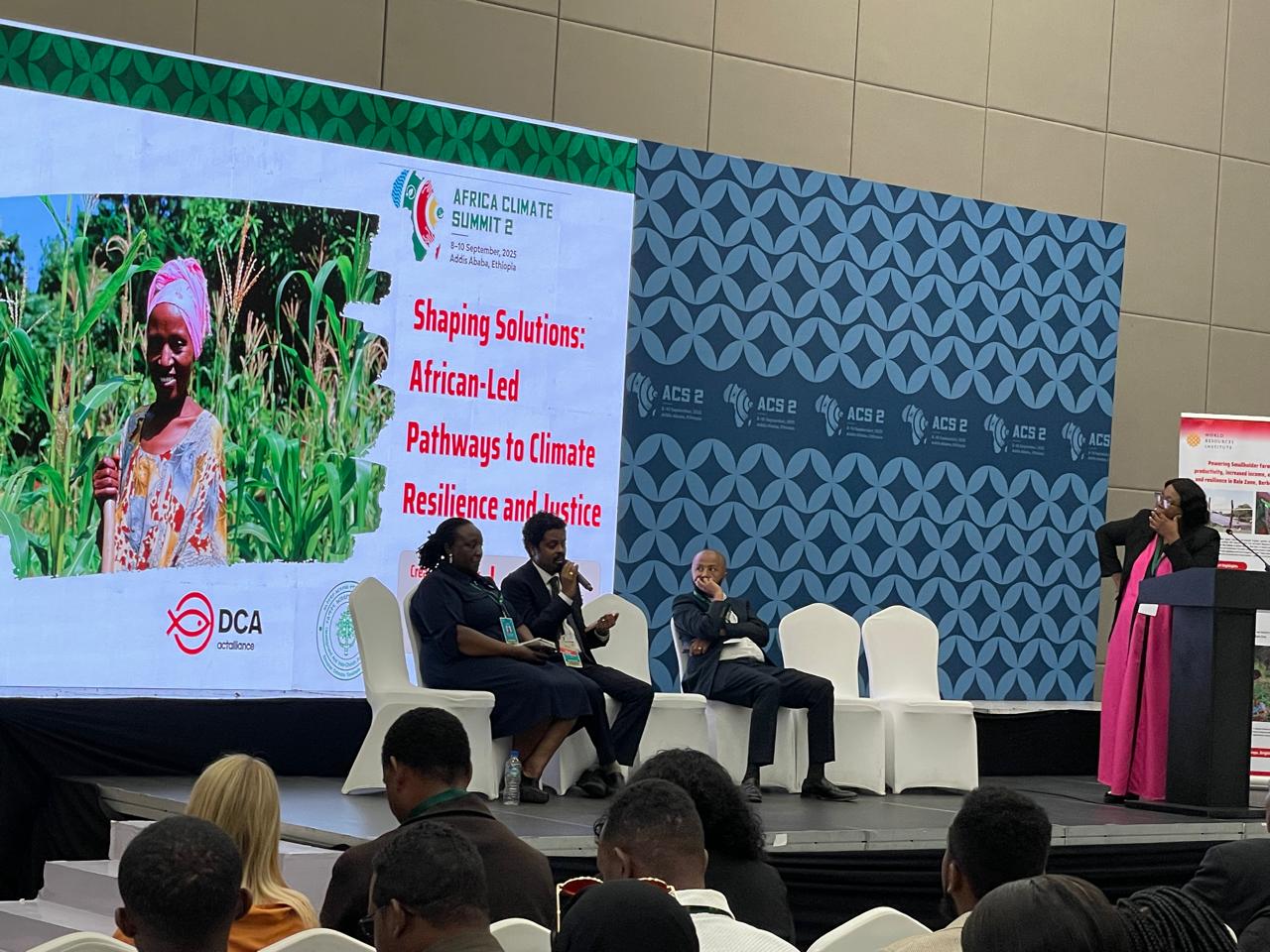
Shaping Solutions; African led pathways to climate resilience and justice
On the fringes of the ongoing Africa Climate Summit in Addis Ababa, conversations are abound. During the session on Shaping Solutions; African led pathways to climate resilience and justice, the Ugandan Minister of Finance, Planning and Economic Development, Mr. Matia Kasaija, also serving as Co-chair of the Ministers of Climate Action, in a key note address, underscored the urgent need for African finance ministers to play a more active role in climate adaptation conversations.
He highlighted that Africa remained the most vulnerable continent to climate shocks and it was necessary to identify continent-specific solutions despite historical and structural challenges dating back to the colonial period. The session was informed that disasters such as floods, droughts and other natural calamities contributed to displacement and the resettlement of affected populations resulting in high expenditures, reduced revenues, and an increase in debt burdens as governments worked to protect citizens. The minister noted that these realities required pragmatic financing strategies that addressed the immediate needs while laying the groundwork for long-term resilience.
Minister Kasaija identified several priority areas for African countries to invest in, including but not limited to increased investment in tourism, agro-industrialisation, smart agriculture, and the construction of resilient infrastructure at various levels from the household, community to national levels. He emphasised the need for funds reaching households in order to support adaptation measures thereby reducing dependency and creating sustainable livelihoods. The minister explained that for this to happen, it was imperative that ministries of finance allocate resources deliberately and strengthen domestic revenue generation. This, he explained were some of the resolutions arrived at during previous deliberations including the Pre-Summit conversations for the Coalition of Finance Ministers for Climate Action- Advancing climate smart financial policies held at the Adawa Museum, Ethiopia.
The session was also informed that all platforms developed by external partners should be country-led and aligned with national priorities. It was noted that integrating Nationally Determined Contributions (NDCs) into government budgeting systems, scaling up climate finance at local, domestic, and global levels, and promoting technology transfer incorporating local solutions were highlighted as essential steps in addressing innovative financing approaches.
During the panel discussions, representatives from the Orthodox Church of Ethiopia, highlighted the importance of embedding early warning systems within pastoralist communities and called for government investment in artificial intelligence to improve weather forecasting. They were emphatic that national adaptation plans ought to be inclusive and cover all regions including the transboundary ecosystems between countries. It was resolved that many African countries should finalize or implement their National Adaptation Plans (NAPs), which remain critical for climate resilience. It was further observed that religious and cultural institutions often custodians of indigenous knowledge such as the management of rivers and forests, should be recognized and financed as part of climate justice initiatives.
The panel underscored the role of indigenous knowledge in sustainable development and the need to integrate peacebuilding into adaptation strategies, particularly in post-conflict settings where the destruction of resources and infrastructure continued to be costly. Urban development, they added, should adopt climate-smart approaches such as solar integration in the built environment.
The representative from the Danish Embassy in Ethiopia urged Africa to build a strong alliance ahead of COP30, positioning itself as a defender of multilateralism. He stressed that COP30 must prioritize the voices of least developed countries, with African concerns articulated clearly and consistently. The session concluded with a call to ensure that the decisions and commitments made at the Africa Climate Summit (ACS2) are consolidated and advanced at COP30 as part of a stronger, more unified African position.