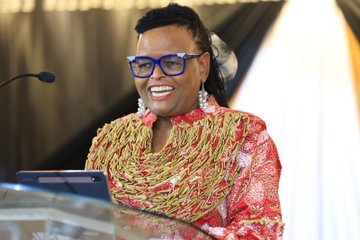
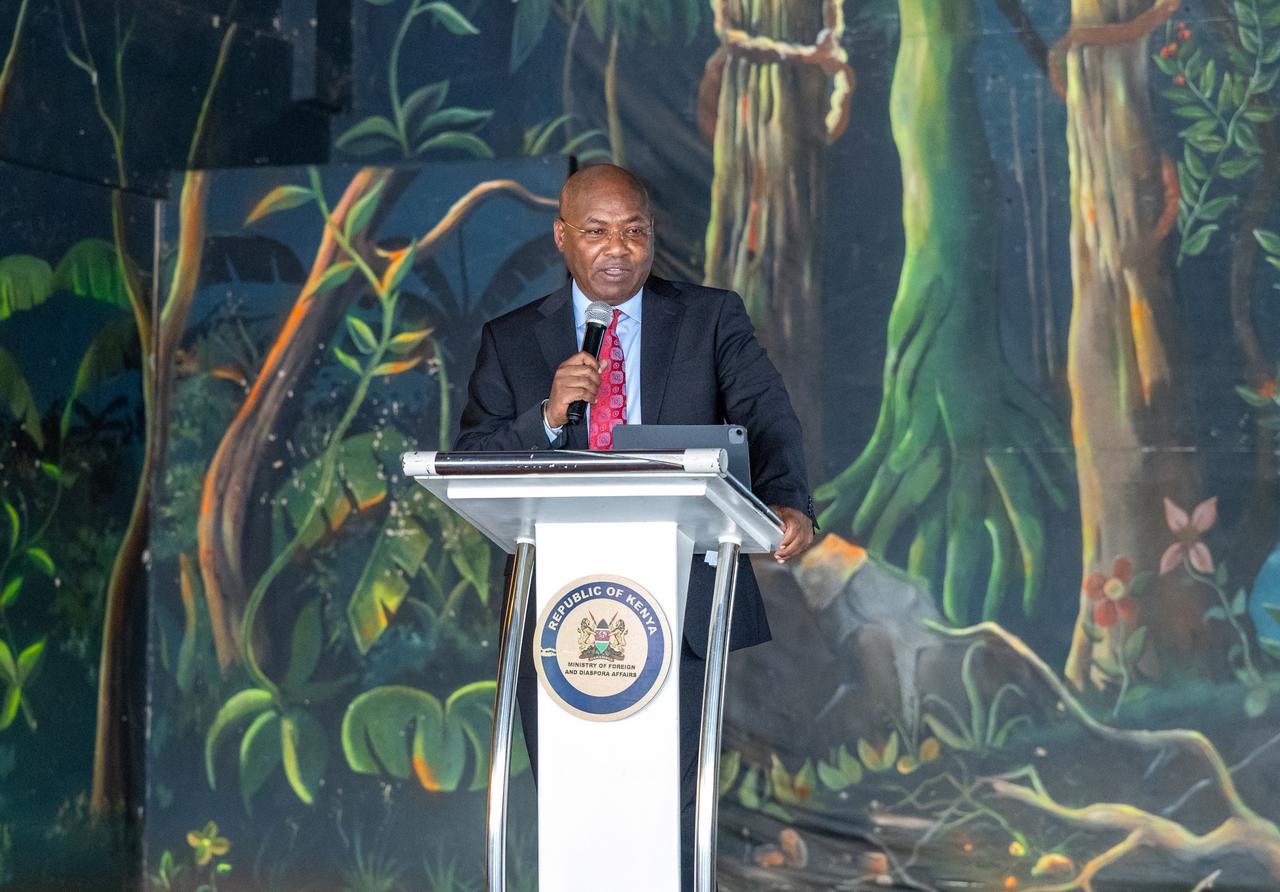
KEYNOTE ADDRESS BY AMB. (DR) AMINA C. MOHAMED, EGH, CAV, DURING THE OXFORD BUSINESS FORUM-AFRICA, SAïD BUSINESS SCHOOL, UNIVERSITY OF OXFORD, UNITED KINGDOM, MARCH 11, 2017
Peter Tufana, Dean, Said Business School,
Peter Links, Oxford Business Network, Co-Chair,
Lauryn Chidoni, Oxford Business Network Co-Chair,
Adewale Tinubu, Group Chief Executive of Oanda PLC,
Distinguished panelists, keynote speakers,
The entire University of Oxford and Said Business, School fraternity,
Ladies and Gentlemen,
I appreciate the invitation to speak at this year’s Oxford Business Forum Africa. The overall theme is very significant in this age of digital revolution when barriers to information and communication have been reduced significantly; levelling the playing and writing fields dramatically. My intervention this evening will be based on the African proverb: “until the lion learns to write, all the stories will glorify the hunter.”
Africa’s narrative has for a long time been presented from an alien’s perspective. As a result, that narrative has been incomplete and in many instances, inaccurate. The writers of this narrative painted the image of a ‘Dark Continent’ plagued by disease, poverty, dependence, ignorance and conflicts. The people of Africa were collectivised into one common identity “the Africans,” who were helpless and in dire and continuous need of civilization and liberation.
This almost deliberate distortion of Africa’s reality led to conversations genuinely inquiring about the state of our “country” among what many of us would have considered informed company. Africa, a country? One that is three times the size of Canada, three times the size of China, and bigger than China, Europe, the United States and Japan combined? And one that has 54 independent and sovereign States?
One of our most prominent African authors related a story of his encounter with a young American who asserted that people in Africa reside on trees. They reportedly agreed with him adding that he in fact also knew the tree on which the American Ambassador in his country resides!
This narrative obscured and regrettably continues to obscure the truth about Africa, her people, their rich cultures, the dynamism and the vast potential of the continent. But facts are hard things to argue against. In fact, Africa was a vibrant continent as early as 800 AD when trade along the East Coast of Africa, for example, was bustling with economic activity. Mombasa, Malindi and Sofala were anchor trade cities with Asia; playing critical passage to African and Asian goods such as gold, silk, iron, cotton, and spices.
Sadly, towards the end of the thirteenth century, many of the ancient cities which were centres of trade, culture and even learning in Africa were destroyed; disrupting trade and livelihoods. But the truth cannot be hidden for long: “you can steal a drum and hide it – but you can’t hide and play it”- African proverb.
The ruins stand as a reminder that African civilisation was not a mere act of western benevolence. I invite you all to visit and witness the wonders of Gedi in Watamu along the Kenyan coast, Timbuktu in Mali, Touba in Senegal, Giza in Egypt, Kiroun in Carthage (modern day Tunisia), among many other landmarks in Africa.
Today, one can say with some confidence that Africans are working hard to tell the African story. The narrative of darkness no longer stands unchallenged. (For example, just before the visit of the President of the United States of America to Kenya, a renowned media house referred to Kenya as a ‘hot bed of terror.’) Within a New York minute, Kenyans not only rejected that characterisation of their country, but took pride in explaining what kind of hot bed it truly was: one of innovation, dynamism, great hospitality, warmth and beauty. Forcing an in-person delivered apology by the Executive Vice President of that international media house.
Ladies and Gentlemen,
The sands of time have shifted on many grounds. Africa has moved from being the land of hopelessness and disease has shifted to one that embodies vibrancy, hope and opportunity. It is now a mega market for intra-African production and global trade. There are opportunities in every nuke corner of our great continent and it’s open for business – fair, inclusive and sustainable business.
The share of Foreign Direct Investment (FDI) between 2007 and 2013 rose from 3.2% to 5.6%, a demonstration of the growing interest in Africa. Over the same period, the middle class increased to 300 million people, according to the African Development Bank.
Additionally, over the last 15 years, Africa’s growth has been impressive, picking up from an average of 2% during the ‘80s and ‘90s to just above 5% between 2001 and 2014. It dipped briefly to just below 4% since 2014, largely due to global decline in commodity prices but continues to rise and stabilise. The dip highlights the need to strengthen Africa’s economic base through diversification and industrialization.
(Agricultural modernization, value addition and beneficiation are important to shelter our producers from extreme market fluctuations moving them up the value chain. This diversification, industrialization, agricultural modernization, value addition and beneficiation avails a wide range of opportunities for investors.)
Africa’s common agenda is stronger than it has ever been. We recognize that to position Africa as a key player on the international arena, we must deepen our own integration within the continent while strengthening cooperation with other parts of the world. We hold on to the wisdom of our elders: “if we want to go fast, we will go alone, but if we want to go far- we will walk with others.”
So we are working towards creating a Continental Free Trade Area (CFTA) that will enhance Africa’s attractiveness to investors and also help improve the level of intra-African trade which currently stands at approximately, 16 per cent as opposed to North America’s and Western Europe’s 40% and 63% respectively. Writing our own narrative and shaping our destiny demands that we rapidly increase intra-African trade and investment, advance infrastructure and seamless connectivity, enable faster dissemination of information and ideas to foster innovation and investment, allow the free movement of capital, goods, people and services.
Equally important is the deepening and entrenchment of a culture of democracy, the rule of law, and nurture good governance across the continent. The full participation of our people in economic, political and social development of our countries must become a matter of course.
And yes, we are making good towards continental integration. We have already launched the grand Tripartite Free Trade Area which is a critical building block of the Continental Free Trade Area. Once operational, the Tripartite Free Trade Area will be one of the largest single markets in the world bringing together the East African Community (EAC), the Common Market for Eastern and Southern Africa (COMESA) and Southern Africa Development Cooperation (SADC) comprising of 26 countries with a population of 600 million and a GDP of over USD 624 billion.
Beyond integration, Africa is seeking to forge partnerships – smart partnerships. We recognize that Africa holds about half the world’s unexploited mineral potential, plenty of uncultivated land (about 600 million hectares) diverse endowments including in energy, agriculture, ICT, transport, untapped biodiversity, tourism and a rapidly growing population of 1.2 billion people in 2015 that is expected to grow to 2.5 billion people by 2050 – comprising about a quarter of the total world population.
Ladies and gentlemen,
Our 54 countries have the raw materials, the space, the market and the labour necessary to provide a decent livelihood to our people. As Mahatma Gandhi said: “the world has enough for everyone’s need, but not enough for everyone’s greed.”
It is also true that this generation of Africans is the most educated that the continent has ever had. It is increasingly positioning Africa as an emerging frontier of innovation. In Kenya, for example, we have pioneered innovative technologies that are enhancing productivity and transforming the way we transact business. Innovations such as Mpesa, Mshwari, Mkesho, Okoa Jahazi – mobile phone-based money transfer platforms – for example, have revolutionised the financial sector. According to analysis from the Central Bank of Kenya, 42% of Kenya’s GDP is transacted through Mpesa which has 18.2 million registered users, 13 million active monthly users, 4.3 million on 3G enabled phones and 3.4 million using smart phones.
The monthly value of person-to-person transfer in 2011 was Kshs 63.87 Billion (USD 751 Million). In 2015, this was approximated to have risen to KES 77 Billion. These advancements have enabled other transformative and modular technological advances such as M-farm, which supports farmers and small scale traders, M-Kopa and Mobisol which are off grid solar technologies providing great alternatives to energy especially in rural Kenya.
There are therefore major opportunities of partnerships in promoting enterprise development and innovation in Kenya and other parts of Africa. Partnerships will provide opportunities for investors to benefit from one another in terms of innovations and financing. They will also facilitate the growth and expansion of countless start-ups in Africa and expedite their growth from local establishments to global enterprises.
I am aware that lingering negative narratives about Africa make investors doubt the business environment in the continent. The truth of the matter today is that in most African countries, the private sector has established solid inter-sector links to engage the public sector in policy and legal reforms, effectively aligning the business environment with the needs of private, international and local investors.
(Beyond existing national platforms such as Chambers of Commerce, time has come for similar initiatives to be adopted and nurtured at the regional and continental level. The East African Business Council is an example of a model that can be scaled to the continental level.)
The high growth rates being witnessed in many African States are therefore not just single accidental occurrences, but the result of conscious political, economic, social, legal and regulatory transformation. The evidence suggests that there is home-grown leadership desirous of and steered by good governance, transformative economic policies, investment in infrastructure and inclusivity. All this underpinned by basic laws that reflect the demands of the people and the times. Examples that quickly come to mind are the Constitutions of Kenya and South Africa as more and more African countries review and amend their independence, 1960’s Constitutions.
Last and most important is our greatest asset and opportunity − the youth of our continent. With 65% of our population below the age of 35, the continent’s enviable pool of young, energetic, talented and increasingly innovative and self-driven and creative workforce presents an unparalleled demographic head-start. While financial capital remains inadequate and largely inaccessible, African youth have demonstrated that passion capital is a powerful tool for change and progress. The task for our governments is to ensure that this passion is supplemented by affordable and accessible financing, skills development, and training and unrestricted and free movement across the continent.
Finally, the rallying call for all of us must be ‘move and act together.’ This is a sure way to accelerate Africa’s assumption of its rightful place in the community of Nations and to a destiny of shared prosperity.
Thank you very much. Asanteni sana.